"I was so shocked and terrified." "I never want to watch this kind of film ever again." These are some of our understandable first reactions to Touki Bouki; however, when covering a topic of neocolonialism, oppression, and a sense of self, you can't make a light, easy-to-watch film. The blood and animal slaughtering may be difficult to watch, and we feel sorry for the cows because we know they are really smart and have lots of fear. Yet, there's meaning behind the slaughter scenes. They represent the protagonists and how they are in a place they don't belong, symbolizing the harsh, violent realities of life and the collapse of African culture. We felt sorry for the people who were killing the cows too, because they are doing it to live.
Touki Bouki leads the audience through a journey of different emotions: laughter, distress, and inspiration. It depicts a raw journey of navigating life through post-colonial poverty to achieving world-class dreams, symbolizing an identity crisis of young people in post-colonial Africa. We get to follow two young characters chasing their dreams. Even in poor conditions, there's still longing, and the protagonists striving to chase the dream to go to Europe can make an audience smile. Still, is it a dream? The style is inspiring, the narrative confusing. But the pursuit of change or a better life doesn't always conclude with clarity or mental well being. Mory wants to escape his situation without any specific plans, so it feels like a dream; it is chaotic but in a beautiful way.
The film has a raw, adventurous feel to it. Key words and phrases that come to mind are safari, desert, nature, and humanism. The way the film visually tracks the characters for long periods of time keeps the audience invested in their adventure. Touki Bouki doesn't tell you outright what's going on. The director delivers images and scenes that really make one think about the story and the characters. Little to no dialogue makes the film much more immersive and thought provoking, allowing the audience to make their own interpretation. One of the first things one notices besides the vibrant, popping colors, is the drumming, and how the sound of drumming continues while the scenes change. The film mainly uses natural sounds that come from within the scenes. Because of this, the film feels more raw and realistic, as if the director wanted to present reality rather than a polished cinematic experience.
The editing and overall method of storytelling are unique. The cuts in between different shots almost gave an eerie feel to the film, as if it is cursed or contains some kind of haunted footage, making audiences feel a sense of unease. The repeating music adds to this feeling. The film leads the mind into exploring and weighing out ideas about neo-colonialism without any pressure to choose a side. It uses contradicting and clashing images and techniques to create intellectual montages that convey the conflict between traditional and modern values: contrasting colors, sound, and jarring shifts from one shot to the next. When it comes to the characters, they lack substance, but maybe they are designed that way. The film has a second cinema feel where we see the problem but are not fully motivated to do something about it. The characters also are like that. They see the problem, they try fixing it, but they end up just accepting things in the end.
The ending is important. In the film, France represents freedom and a way out, but it's not safe. The moment one leaves their place and accepts France, they are letting their country get colonized. In the end, one character decides to stay and one decides to leave, showing that there is no right or wrong answer in accepting or rejecting new values. Perhaps Mory went back to find his culture, but then found that while he was gone, modernity had defeated tradition and that traditional culture cannot overcome modernity.
(Gahyun, Maya, Haeun, Jiyoung, Zane, Joohee, Nawoo, Sally, Yoona, Hojune, Soojin, Yoo, Yingyue, Jae Yong, Michelle, Crist)
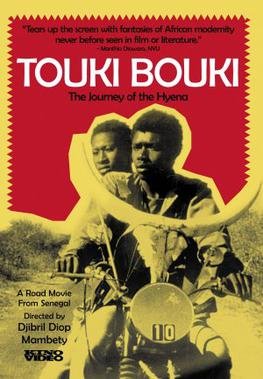
Theatrical poster
"There's meaning behind the slaughter scenes. They represent the protagonists and how they are in a place they don't belong."
— Haeun Cho
"Touki Bouki shows visuals without much guiding narration. It feels like a dream. It is chaotic but in a beautiful way."
— Michelle Siega
A note on this essay: The collective response above was assembled from individual student journal entries written immediately after the screening. Entries were compiled and edited using AI to eliminate repetition, preserve disagreement, and honor each student's voice — reducing the total word count by 75%. The writing remains the students' own.